

This research, documents and analyses the interior, architectural and urban projects of Wilhelm Riphahn in Koeln Germany.
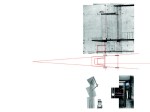
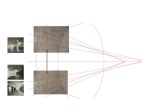
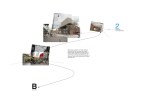
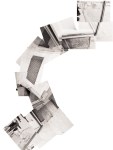
Riphahn himself said when asked about the architectural ideas at work in his buildings “let the buildings speak for themselves”. Therefore this work uses an experiential mode of documentation one, as a means of understanding and to reveal the spatial mechanisms at work. This mode of documenting space, as all regardless of the spatial scale it was ‘interiorized’ and scaled to the human body . This mode of analysis, allowed the ‘object’ architecture and master plan to disintegrate into an active moving frame, in which architecture becomes the surround through which we move.
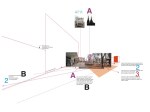
In experiencing the space, one can read the traces of a set of spatial ideas. It is these traces left through the very process of constructing space – traces seen as walls, openings, and juxtapositions of program, which speak to us as user, and inhabitor. Architecture is experienced not as object specifically but as the experience – or passage through – a series of spatial fields i.e. in motion, – an “Inscape” rather than “outlook”, where ones passage makes an incursion across the threshold into private understanding. In revealing this relationship, and the significance of which it describes, is not only architectural, but it speaks to the notion inscribed within its creation, its time and place, which has ultimately cultural significance and social values and brings to the surface another reading of Modern Architecture, found in the translation between wars. An extension of the intital ideals of modernism, expressionism and played out in some of these works uniquely.
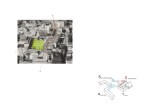
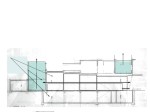
Throughout his career Riphahn implemented a set of spatial plays/constructs that were used at every scale, from the scale of interior renovation to the large scale of urban areas of the city, a street and series of linked plazas. This set of spatial plays/constructs influenced the relationships or readings of the relationship between the part to the whole, the detail to the city, building facade to the platz, and creating a frame that connects places of significance in the city itself.
Note: Contact Author for Original/Detail Images and Texts







 iipinternationalideapoolforarchitectureandurbandesign.org