

“Every period in human culture has developed a spatial conception.”1
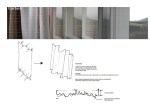
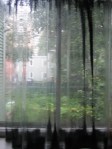
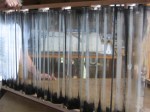
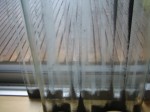
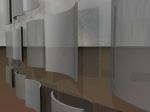
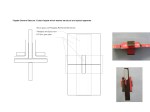
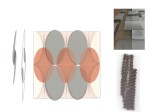
This research investigated two modes of cultural production, architecture and cinema, as spatial constructs to develop a set of perceptual relationships. An analysis of cinematic images (digital video) and architectural glass facade components. In cinematic image, the ‘threshold’ is dependent on the relationships set up between viewer and view, which is controlled through the camera, transition between frames, and manipulation of depth of field and focus. The glass facade as spatial construct is set by connecting the point of view of the moving viewer / inhabitant / pedestrian, and the facade it self; its’ the components that make it up [structure or frame and glass]. Through emphasizing the threshold and spatial perception, vision is materialized. The facade is no longer about looking through it, but instead bring both the materiality of architecture back into focus. Prototype done in Sattler Glass Studio with technical assistance of Norbert Sattler http://www.sattlerglass.com/
Note: Contact Author for Original/Detail Images and Texts




 iipinternationalideapoolforarchitectureandurbandesign.org